
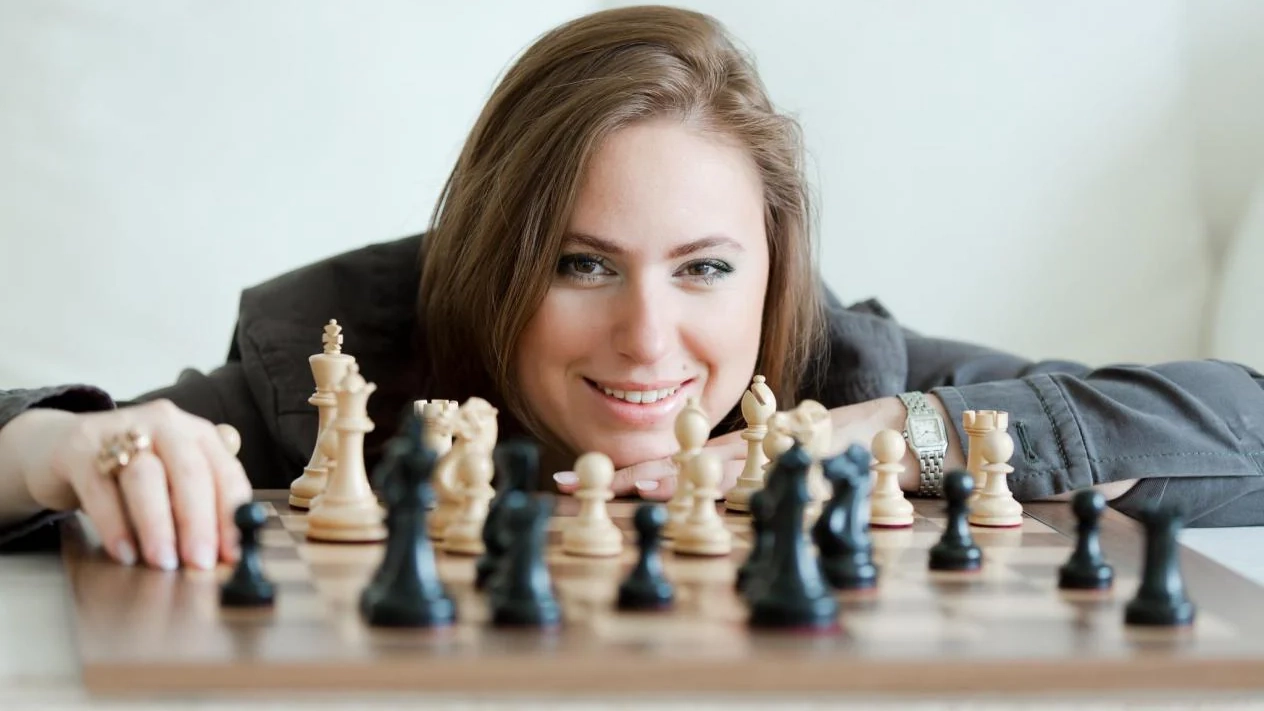
What Judit Polgar’s Training Teaches About Improving at Chess
Judit Polgar is widely regarded as the strongest female chess player in history. She became a grandmaster at 15, competed successfully against the world’s top players, and spent years among the elite in open competition. Her career has recently returned to wider attention through the Netflix documentary that refers to her as the "Queen of Chess", introducing her story to new audiences.
Beyond the results, she has been an inspiration to many chess players. Watching her challenge long standing assumptions about who belongs at the top level, and seeing her compete and win against the very best, including Garry Kasparov, left a lasting impression on the chess world. Her games were not just symbolic milestones. They demonstrated that strength comes from preparation, understanding, and training.
That makes her story valuable not only as inspiration, but also as a source of practical lessons. Looking at how her strength was built highlights ideas that remain relevant today. Consistent work with positions, exposure to tactical patterns, and structured training over time are principles any player can apply when working to improve at chess.
Consistent Work Beats Occasional Effort
One of the clearest takeaways from Judit Polgar’s training is the amount of time she spent actively working with chess positions. Solving, playing, reviewing, and thinking about ideas were part of her routine.
Most players today cannot match that volume, and that is not the point. The practical lesson is consistency. Strong chess training methods are built around regular engagement rather than rare bursts of activity.
Short sessions done frequently tend to produce more progress than long sessions done occasionally. Improvement comes from seeing ideas repeatedly and allowing familiarity to build over time. This applies to players of every level and is one of the simplest habits to adopt.
Pattern Recognition Guides Calculation
Reading about Judit Polgar’s development shows how comfortable she became in complex positions early on. That comfort comes from experience. It comes from seeing enough structures and tactical ideas that key moments become recognizable.
Recognition and calculation work together. Recognizing a motif helps direct attention toward the lines that matter, and calculation confirms the details. As experience grows, players become better at identifying critical moments where deeper thinking is required.
This recognition includes both fundamental and advanced tactical ideas. Common patterns like forks and pins are part of the foundation, while more complex themes such as deflection, sacrifice based combinations, intermediate moves, discovered attacks, and forcing sequences appear as understanding deepens.
Chess tactics training is one of the most effective ways to develop this ability. Each solved position strengthens familiarity with recurring ideas. Over time, decisions become clearer and calculation becomes more focused. Judit’s development illustrates what sustained exposure to meaningful positions can produce.
Structured Training Beats Random Practice
Another important lesson from Judit Polgar’s training is structure. Her work was not random activity. It was organized and purposeful.
Modern players benefit from applying the same approach. Effective chess tactics training is not about solving puzzles endlessly without reflection. Reviewing mistakes, revisiting themes, and reinforcing patterns are what turn activity into improvement.
Structured practice builds retention and understanding. It allows players to recognize familiar ideas faster and apply them with greater confidence. This kind of deliberate organization is one of the most reliable ways to improve at chess without needing dramatically more training time.
Consistency Matters More Than Talent Debates
Discussions about natural ability are common in chess, but they rarely provide useful direction for players trying to grow. A more practical takeaway from Judit Polgar’s training is the role of consistency.
Skill develops through accumulated experience. Each training session, each solved position, and each reviewed mistake contributes to intuition and understanding. Progress is gradual and often subtle, but over time it becomes significant.
This principle extends beyond chess. Many complex skills develop through repetition and reflection. What matters most is maintaining habits that support steady improvement.
For everyday players, this perspective is encouraging. Improvement is shaped by effort applied consistently over time.
Applying the Lesson Today
You do not need a professional training environment to apply these ideas. The core principles are accessible:
- Work on tactical positions regularly
- Pay attention to recurring patterns
- Review mistakes to reinforce learning
- Stay consistent over time
These ideas sit at the heart of effective chess training methods and explain why tactics work remains valuable at every level.
Judit Polgar’s story is inspiring, but it also provides grounded insight into how chess strength develops. While most players are not aiming for elite competition, many want steady improvement and deeper enjoyment of the game. Her example highlights that progress grows from structured effort and meaningful interaction with positions.
Players interested in a broader framework for improvement may also find it useful to explore our guide on how to improve at chess.
Improvement is not built in a single breakthrough moment. It develops gradually through engagement with the board, one position at a time.